‘The State of Us’ Review: Sam Bottomley and Callum Scott Howells Navigate the Fault Lines of Friendship, Grief and Growing Up
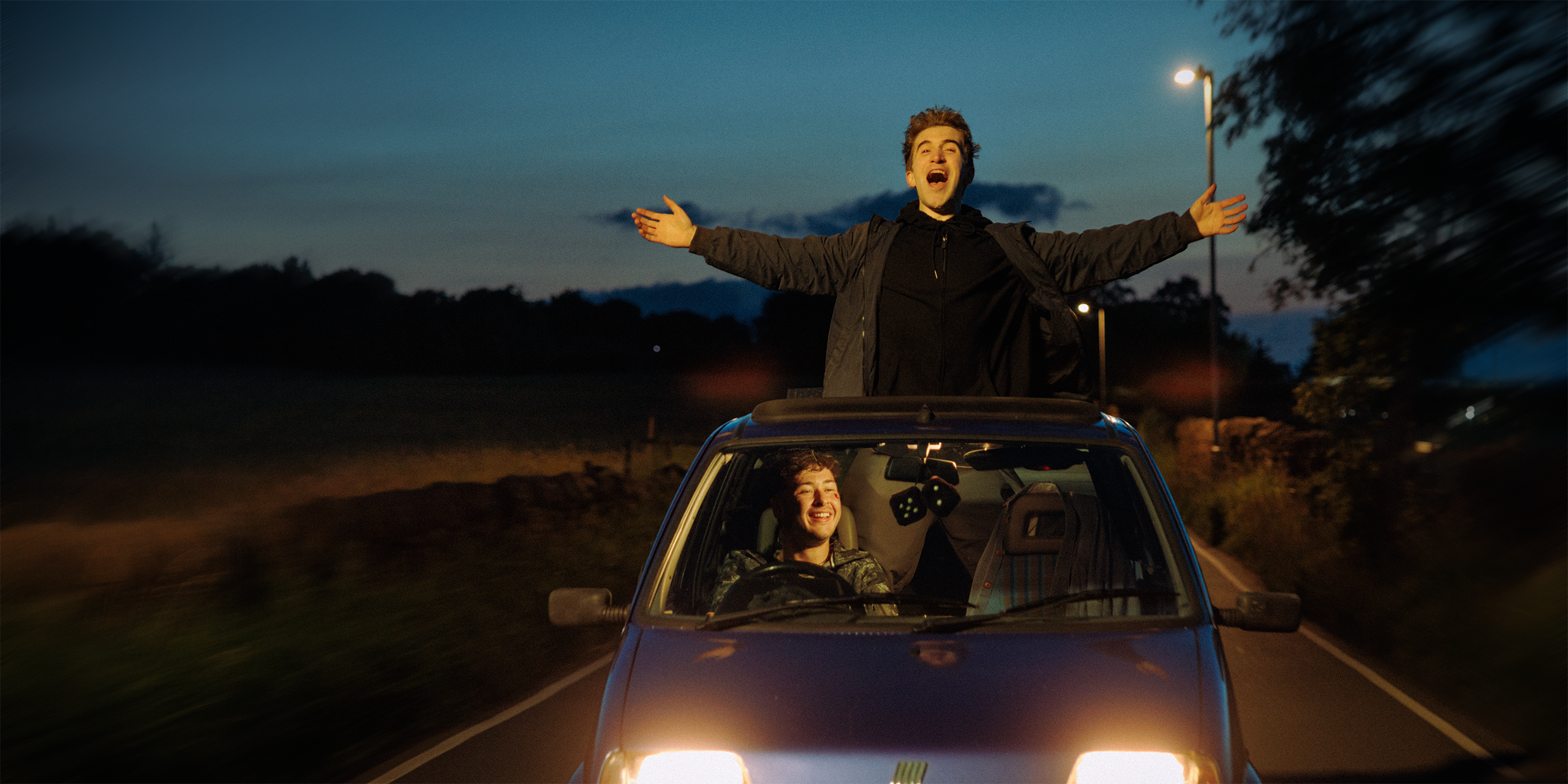
Callum Scott Howells and Samuel Bottomley lead ‘The State of Us’ COURTESY OF EIFF
There is something deceptively straightforward about The State of Us. Two best friends. One night together. A series of increasingly reckless decisions. And the knowledge that, by morning, one of them may have to return to a hospice.
In the hands of Ollie Gardner and Jake Harvey, however, that premise becomes the foundation for something considerably more affecting. Their debut feature is a film about terminal illness, but it is equally interested in everything that exists around it: friendship, resentment, family, masculinity, grief and the terrifying difficulty of saying what we actually mean to the people we love.
Set and filmed in Bradford, The State of Us follows Frankie (Samuel Bottomley), a young man carrying years of unresolved grief, who breaks his terminally ill best friend Taylor (Callum Scott Howells) out of the hospice where he is spending his final weeks. What begins as an impulsive night out gradually becomes something more significant as the two move through the places and people that have shaped their lives while trying to postpone the reality waiting for them at the end of the night.
SAMUEL BOTTOMLEY AND CALLUM SCOTT HOWELLS
The premise could easily have produced a conventional tearjerker. Gardner and Harvey instead give the film room to breathe.
The State of Us understands that people dealing with devastating circumstances do not suddenly stop being funny, immature, selfish or ridiculous. Frankie and Taylor still argue. They still take the piss out of each other. They still make terrible decisions. They still want to have a good time.
That refusal to make grief solemn at every moment is one of the film’s greatest strengths.
Taylor’s illness is never allowed to become his personality. Howells gives him warmth, humour and frustration alongside the fear and acceptance that naturally come with his situation. There is enormous sadness in Taylor, but there is also an obvious desire to keep living. Howells understands that distinction, giving the character an emotional complexity that prevents him from becoming a conventional tragic figure.
Frankie, meanwhile, is not simply the reckless friend who refuses to accept what is happening. His anger, humour and destructive behaviour are rooted in years of unresolved grief and the fear of losing the person who has provided him with a sense of family and stability.
Bottomley gives an exceptional performance, balancing Frankie’s volatility with an underlying vulnerability that gradually becomes impossible to ignore. He can be infuriating one moment and completely heartbreaking the next, yet the performance never reduces Frankie to either extreme. There is always something beneath the bravado.
Howells is equally impressive. Taylor carries an enormous emotional burden, yet Howells gives him an energy and warmth that prevents the character from ever being defined by his illness.
Their chemistry is particularly powerful because their friendship feels lived-in rather than constructed for the camera. The teasing, arguments, laughter and moments of silence suggest years of history between them. Neither performance feels as though it is reaching for the audience, and that naturalism makes the emotional moments considerably more affecting.
It’s that relationship that ultimately becomes the heart of the film.
THE FILM’S APPROACH TO MASCULINITY
The film’s treatment of masculinity is particularly effective because it never feels as though it is trying to deliver a lecture.
Instead, it simply allows two young men to exist within a friendship where vulnerability is possible.
Taylor repeatedly attempts to get Frankie to confront what he is feeling, while Frankie hides behind jokes, anger and impulsive behaviour. He struggles to articulate his grief because admitting how much Taylor means to him would also mean acknowledging the possibility of life without him.
The result is a surprisingly honest depiction of male friendship. These are characters who love each other deeply, but have never necessarily been taught how to articulate that love.
That makes the quieter moments between them particularly powerful. Emotional intimacy does not always arrive through a speech or dramatic confession. Sometimes it exists in a joke, a look, an argument that has clearly happened a hundred times before, or simply two friends sitting beside each other without knowing what to say.
Gardner and Harvey understand that friendship can be messy without becoming any less profound. The boys irritate each other, make each other laugh, argue, misbehave and occasionally fail each other. Beneath all of it is an obvious and deeply rooted affection.
That makes the film’s exploration of grief feel much more truthful. Frankie is not simply grieving Taylor’s future. He is grieving the family, childhood and sense of belonging that Taylor represents.
BRADFORD, CINEMATOGRAPHY AND SENSE OF PLACE
The Bradford setting is equally important.
Rather than functioning simply as a backdrop, the city becomes part of the boys’ history and identity. The contrast between Bradford’s urban environment and the surrounding Yorkshire landscape gives the film a distinctive sense of place, while the decision to tell a story like this outside London adds something valuable to contemporary British cinema.
There is a particular beauty in seeing these characters move through places that feel familiar to them. The roads, houses, streets and surrounding landscapes become reminders of everything they have experienced together and everything they are about to lose.
Visually, The State of Us benefits enormously from cinematographer Yunus Roy Imer’s intimate approach.
The camera rarely feels as though it is imposing itself on the characters. Instead, it stays close enough to capture the small changes in expression and body language that reveal what they are unwilling to say aloud.
That intimacy becomes particularly effective during the quieter scenes, where the camera gives Bottomley and Howells the space to simply exist together. There is no need to overplay the emotion because the performances are doing the work.
The wider landscapes provide an effective counterpoint. When Frankie and Taylor are surrounded by the Yorkshire countryside, there is a sense of temporary freedom that contrasts with the reality waiting for them. The world around them suddenly feels much larger, while their remaining time together feels increasingly small.
It gives the film a visual language that reflects its emotional tension without becoming overly stylised.
THE MUSIC AND TOM OGDEN’S SCORE
The film also has a strong musical identity, with an original score from Tom Ogden of Blossoms adding another emotional layer to the journey.
Ogden’s involvement feels particularly appropriate for a film so interested in youth, memory and the passage of time. The music captures the contradiction at the centre of the story: Frankie and Taylor are trying to make the most of their night while carrying the knowledge that this freedom cannot last.
The score does not need to dictate what the audience should feel. Instead, it becomes part of the atmosphere surrounding the characters, moving between youthful energy, nostalgia and melancholy.
That balance is crucial. The State of Us is at its best when happiness and sadness are allowed to exist simultaneously, and the music reinforces that idea without overwhelming the performances.
The film’s wider use of music also complements its sense of youth. These are characters experiencing one of the most painful periods of their lives while still being recognisably young men who want music, excitement, alcohol, laughter and one last night where their circumstances do not define them.
A DEBUT THAT FEELS PERSONAL
The circumstances behind the production make the finished film even more impressive.
The State of Us was shot in just 12 days, an extraordinary constraint for a feature carrying this much emotional and logistical movement. Yet the film rarely feels restricted by that schedule.
If anything, the compressed production seems to have contributed to its immediacy. There is an energy to the filmmaking that suits a story unfolding over a single night, while the performances retain a natural looseness that helps the friendship at the centre feel spontaneous.
For a debut feature, Gardner and Harvey demonstrate an impressive understanding of tone and character.
Most importantly, they have made a film that feels personal.
It does not simply want audiences to feel sorry for its characters. It wants audiences to recognise themselves in them, particularly in the ways we avoid difficult conversations, hide behind humour and sometimes fail to appreciate the people closest to us until we are forced to confront how little time we may have left.
The film never treats Taylor simply as a symbol of mortality, nor Frankie simply as a young man who needs to learn a lesson. They remain complicated people throughout. Their behaviour can be frustrating, their choices can be reckless and their conversations can be uncomfortable, but that imperfection is precisely what makes them believable.
The humour is equally important. There are moments of genuine chaos, bad decisions and laddish behaviour, but the film understands that friendship does not suddenly disappear when life becomes serious. People still joke. They still take the piss out of each other. They still get drunk. They still behave like idiots.
That humour gives the audience the chance to experience Taylor and Frankie’s night alongside them rather than simply watching two characters move towards an inevitable tragedy.
VERDICT
There are films that leave you thinking about their themes, and there are films that leave you thinking about the people you watched.
The State of Us belongs firmly in the latter category.
Its central question is deceptively simple: if you knew you only had one day left with someone you loved, how would you spend it?
The film does not offer an easy answer. Instead, it suggests that perhaps the most meaningful thing we can do with our limited time is simply be present with the people who matter.
That feels like a fitting message for a film so deeply rooted in friendship.
The State of Us is an impressive debut, but more importantly, it is a film with genuine heart. Gardner and Harvey have created something funny, painful, energetic and deeply tender, anchored by two outstanding performances from Samuel Bottomley and Callum Scott Howells.
Yunus Roy Imer’s cinematography gives the film an intimate visual identity, while Tom Ogden’s score adds a quietly powerful emotional current beneath the story. Bradford gives the film its sense of place, while the 12-day production has resulted in filmmaking that feels immediate rather than constrained.
Most importantly, the film understands the value of friendship without romanticising it. These characters frustrate each other, hurt each other, make each other laugh and, ultimately, give each other something that neither of them can replace.
For Gardner and Harvey, this is a remarkably assured first feature. For Bottomley and Howells, it is a showcase for two performers capable of finding enormous emotional depth without ever losing the humanity of their characters.
And for audiences, The State of Us is a reminder of something painfully simple: sometimes we do not realise how much someone means to us until we are forced to imagine a world without them.
Verdict: ★★★★★ | 5/5
The State of Us screens as part of the Edinburgh International Film Festival 2026.
